
In high-level Mythic+ dungeons, beating the timer requires more than clean boss execution—it demands efficient trash routing. Mythic+ Trash Mob Chain Linking is the aggressive Strategy of combining multiple trash packs into a single, high-density pull to maximize AoE burst value. This approach separates teams capable of High-Risk, High-Reward Clears from those stuck in Cautious Pacing Failures due to overly conservative pulls.
This expanded analysis explores pull density optimization, cooldown alignment, tank threat scaling, CC layering, and calculated risk management.
Why Damage Density Wins Timers
Mythic+ timers reward efficiency, not safety. AoE cooldowns—Bloodlust, major 2–3 minute DPS CDs, trinkets, and burst windows—are multiplicative when applied to large mob counts. Using them on a small 4–5 target pack wastes potential damage scaling.
Chain linking increases damage density, meaning each global cooldown affects more targets. The result is dramatically reduced total trash time across the dungeon.
Teams that avoid linking often survive comfortably—but fail keys due to slow aggregate TTK (time-to-kill).
Core Requirements for Successful Chain Linking
Chain linking is not improvisation—it is structured aggression. The following prerequisites must be satisfied:
- Full Cooldown Synchronization: Bloodlust, AoE stuns, and major burst abilities must be ready before initiating the linked pull.
- Tank AoE Threat Dominance: The tank must establish immediate multi-target threat on every mob to prevent aggro splits.
- Interrupt Coverage: High-priority casters across both packs must be assigned interrupt rotations.
- Defensive Layering: Healer cooldown sequencing must be pre-planned to survive stacked incoming damage.
- Pathing Control: Mobs must be positioned in a clean anchor zone without accidental third-pack aggro.
Pull Sequencing: Structured Aggression
Effective chain linking follows a precise sequence rather than chaotic over-pulling:
| Phase | Execution Step | Strategic Purpose |
|---|---|---|
| Anchor Pull | Tank engages first pack and establishes firm AoE threat. | Creates safe burst foundation. |
| Secondary Link | Ranged tag second pack and drag into anchor zone. | Maximizes damage density. |
| Control Window | AoE stun + displacement layered immediately. | Prevents initial burst retaliation. |
| Cooldown Detonation | All DPS CDs and Bloodlust activated simultaneously. | Converts pull into time advantage. |
Threat Scaling and Aggro Stability
The greatest risk during chain linking is aggro fragmentation. If even one add breaks away due to insufficient AoE threat, the entire formation destabilizes.
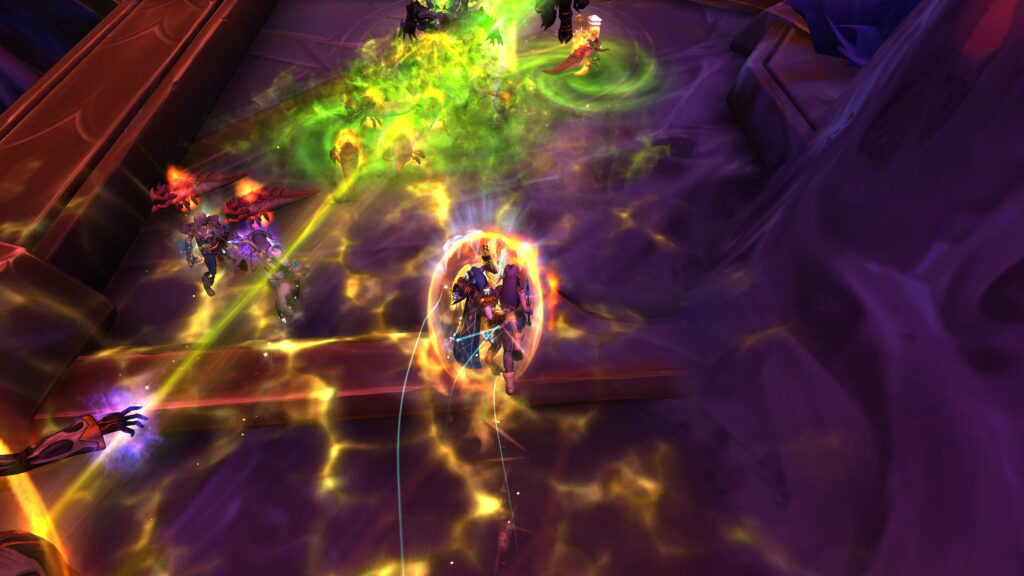
Tanks must prioritize AoE threat generators over single-target damage during the first 10 seconds. DPS players must delay highest-threat burst by 1–2 GCDs if tank threat is not fully established.
Crowd Control and Interrupt Integrity
Linked packs often include multiple dangerous casters. Without disciplined CC and interrupt rotation integrity, the combined damage intake becomes lethal.
AoE stuns should open the pull, followed by staggered interrupts and displacement tools. Diminishing Returns must be managed carefully to avoid control collapse mid-burst.
Risk Management and Salvage Protocol
Even well-planned chain links can destabilize. Teams must define a salvage protocol:
- Immediate defensive cooldown layering if tank HP volatility spikes.
- Hard CC reapplication on surviving high-threat casters.
- Pre-agreed wipe call if the pull becomes mathematically unrecoverable.
Delayed wipe calls waste more time than a decisive reset.
When Not to Chain Link
Aggression must be calibrated. Chain linking should be avoided when:
- Key cooldowns are unavailable.
- Healer mana is below sustainability threshold.
- Affixes amplify mob lethality (e.g., explosive or bolstering variants).

Strategic aggression always considers dungeon modifiers and group condition.
Conclusion
Mythic+ Trash Mob Chain Linking is the defining aggressive pacing strategy for high-key success. When executed with cooldown alignment, threat control, CC layering, and structured sequencing, it produces massive time gains that enable High-Risk, High-Reward Clears.
Without it, groups often fall into Cautious Pacing Failures—safe but too slow to beat the timer. Controlled aggression, not reckless pulling, is the hallmark of elite Mythic+ teams.